How the first year actually happens, stage by stage.
Agriculture gives us productive use of the land and products with established markets. Livestock adds food production and land-management services. Hospitality provides higher-margin cash flow so the farm can grow without depending indefinitely on grants. Tourism brings people directly into the landscape.
Our initial fundraising round is targeted at approximately $100,000 in charitable launch capital. That pool is what makes the Phase 0 purchase financeable while preserving enough liquidity to begin operating. We acquire the land first, put it into productive use quickly, and capitalize each division in stages: rather than trying to fund the whole development at closing.
The 2027 objective
Move from a capital-intensive acquisition period into positive recurring operating cash flow by the second half of the year.
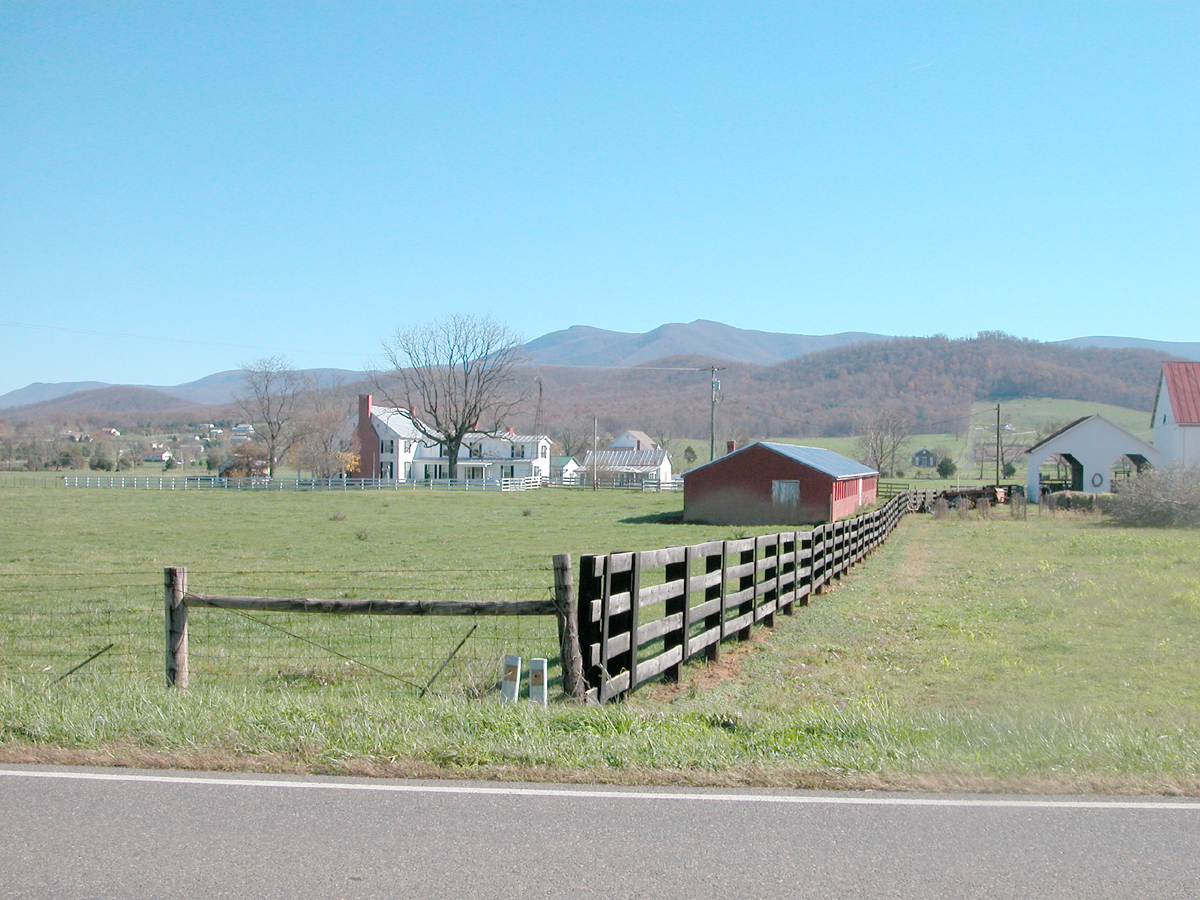
Finalize the purchase of approximately 271 acres of adjoining land. One existing residence becomes housing for farm staff, which is how agricultural employment usually works and how we expect to recruit and keep experienced people. Little renovation is needed up front; the priority is putting the land into productive use quickly.
As a nonprofit, we intend to finance the largest practical share of the land through Virginia's 501(c)(3) tax-exempt bond program (VSBFA), which can cover land, buildings, eligible equipment, improvements, and certain closing costs. At roughly $7.3M outstanding, the program's annual fee is about $7,300 and declines as the bond is repaid.
Acquisition envelope
≈ $8M
Long-term nonprofit financing
≈ $6.4M
Equity
≈ $1.6M
Annual debt service
≈ $485K–$511K
Phase 1
2027 season
Alfalfa and native plants
We will not push all 271 acres into intensive production at once. Most commercial farming concentrates on the 187-acre Leeds Manor property: roughly 150 acres of alfalfa and hay, 12 acres of native seed-production fields, 5 acres of native plant propagation and nursery, and about 20 acres of roads, buffers, water management, and conservation. Alfalfa keeps the land productive and predictable. The native nursery is the real first-year opportunity.
Buyers are wetland and stream restoration contractors, environmental engineering firms, mitigation banks, stormwater contractors, municipalities, and conservation organizations: people working from approved restoration plans that specify exactly which native species must go in the ground.
Alfalfa, 150 acres
$84K–$94K
Native plugs & liners, 650,000 plants
≈ $1.3M
Total Phase 1 agricultural revenue
≈ $1.38M–$1.39M
Initial agricultural investment
≈ $430K
Phase 2
From September 2027
The first flock
Sheep and goats before cattle. Sheep graze grasses and broadleaf forage efficiently; goats take brush, vines, and invasive growth. Run together they use pasture more completely, cut mowing and vegetation-control costs, and open the door to paid grazing and land-management contracts on ground we do not own. The first cycle is as much about building a breeding population as about immediate sales.
Much of the value of a first cycle stays on the balance sheet as an expanding breeding flock rather than showing up as cash. Growth compounds internally instead of being bought from outside breeders each year.
Breeding ewes
125–150
Breeding does
40–60
Foundation stock purchase
$65K–$105K
First-cycle male offspring revenue
$31K–$48K
Females retained to grow the flock
114–148 head
Phase 3
From October 2027
The first tourism season
The opening season lands on Virginia's fall foliage peak in mid-to-late October: overnight farm stays, guided agricultural and livestock experiences, walking trails, seasonal dinners, and photography and nature programming. The hotel is the main infrastructure requirement, and we are underwriting the possibility of a substantial rehabilitation: completing life-safety and building systems while bringing eight or more rooms and the essential common areas into service, with more added as demand proves out.
Planning assumes roughly eight rooms at about a $300 average nightly rate and 45% occupancy from October through December. The first season is meant to prove demand, set pricing, and earn reviews: not to repay the rehabilitation.
Overnight lodging
≈ $99K
Fall farm & foliage experiences
≈ $36K
Food, tours & programming
$15K–$20K
First-season target
≈ $150K
First-year revenue outlook
Native plant production carries the first year. Alfalfa, the first livestock cycle, and the opening tourism season are smaller but they establish three independent markets: and together they are what turns the second half of 2027 cash-flow positive.
Native plugs, liners & seed$1.30M
Fall tourism season$150K
Alfalfa & hay$84K–$94K
First livestock cycle$31K–$48K
Positive recurring operating cash flowH2 2027
What the $100,000 launch round does
Closing readiness
Deposits, appraisals, survey, legal and title work so the three properties can close on schedule in the first quarter.
Bond application
The nonprofit tax-exempt financing package, including the program fees that come with roughly $7.3M outstanding.
First plantings
Alfalfa establishment and the native seed and propagation beds that have to go in the ground before the season, not after it.
Operating runway
Enough liquidity to pay the first people and keep working through the months before revenue arrives.
Who does the work
Farm & operations manager≈ $75,000
Nursery production manager≈ $65,000
Two farm / nursery technicians≈ $90,000 combined
Seasonal planting & harvest labor$60,000–$80,000
Payroll taxes, comp & benefits$45,000–$60,000
Total Phase 1 personnel$335,000–$370,000
You can change this
The food chain won't fix itself. People fix it.
Every dollar goes into land, seed, animals, and the researchers and young farmers doing the work in Fauquier County. Give what's meaningful to you: or bring your company in as a founding partner.